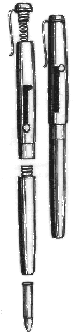
| The cartridge trap consisted of a cartridge set into a piece of
bamboo in a camouflage hole in the ground. A nail was driven through the
bottom of the bamboo, which rested on a solid board. When a man trod on the
upper end of the cartridge, it was forced down on the nail, which acts as
a firing pin and set off the bullet through the mans foot.
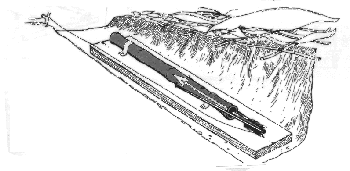
In the angled arrow trap, a piece of
bamboo about a metre long was fastened to a piece of board; inside the bamboo
a steel arrow was held ready to fire by a strong rubber band and a catch
mechanism connected to a trip-wire. The device was placed in a camouflage
pit and sloped so that a man tripping the wire would be stuck in the chest
by the arrow.
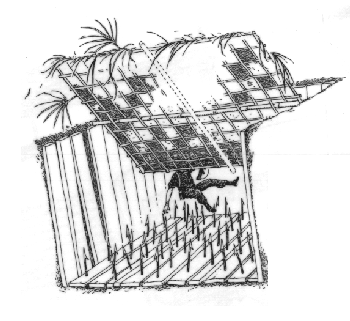 Spike pits were
constructed in various ways, but all had a of shell or sharpened bamboo spikes
pointing upwards. The trap illustrated had wooden sides to prevent cave-ins
and employed a tilting lid supported on an axle. When a man put on on the
camouflage bamboo lid, it pivoted, dropping the man on the spikes below,
and then swung back into place again. Spike pits were
constructed in various ways, but all had a of shell or sharpened bamboo spikes
pointing upwards. The trap illustrated had wooden sides to prevent cave-ins
and employed a tilting lid supported on an axle. When a man put on on the
camouflage bamboo lid, it pivoted, dropping the man on the spikes below,
and then swung back into place again. |
|
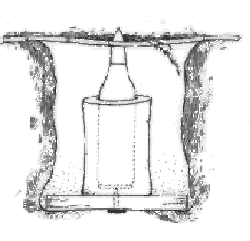
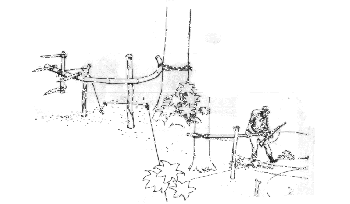 The whip was a trap made from a strong piece of green bamboo
with sharp spikes attached to it which was attached to a tree or post and
bent in a arc around other posts and held by a catch in the firing position.
The catch was released by a trip wire which caused the pole to spring round
and propel the spikes into the victim at chest height.
The whip was a trap made from a strong piece of green bamboo
with sharp spikes attached to it which was attached to a tree or post and
bent in a arc around other posts and held by a catch in the firing position.
The catch was released by a trip wire which caused the pole to spring round
and propel the spikes into the victim at chest height.